

Capstone Essay
Anqi Lei
University of Washington Bothell
Interdisciplinary Arts
anqilei0802@gmail.com | https://www.anqilei0802.com/
January 26, 2026
During my time in the Interdisciplinary Arts and Sciences program at the University of Washington Bothell, I developed a strong interest in how design, research, and creative media shape the ways people communicate ideas and understand complex issues. Rather than focusing on a single discipline, my coursework encouraged me to combine perspectives from visual communication, digital design, and humanities research. This interdisciplinary approach allowed me to explore how analytical thinking and creative practice can work together to produce meaningful and engaging experiences. Through projects ranging from interaction design prototypes to historical research, I learned that design and research are closely connected ways of understanding the world and communicating ideas. My portfolio reflects this learning process through projects that demonstrate my development in design thinking, research skills, creative problem-solving, and critical reflection.
One of the most significant design projects in my portfolio is an interaction design concept created for BIMD 250: Introduction to Interaction Design. In this project, my team developed a communication interface called Space SnapChat, designed to support communication between astronauts on Mars and their families on Earth. The project explored how technology might help maintain emotional connections across extreme physical distances in future space exploration scenarios.
Communication between Mars and Earth involves significant time delays due to the distance between the planets. Because real-time conversation would be impossible, our design focused on asynchronous communication that allows messages to be recorded, transmitted, and viewed later. The interface allows astronauts and their families to exchange photos, video messages, voice recordings, and text messages in ways that simulate the emotional experience of social media while adapting to the realities of space communication.
My primary responsibility in the project involved interface layout, wireframing, and visual interaction design. In the early stages of the design process, I created interface prototypes using a bright green color palette and multiple interface components that attempted to display many features simultaneously. Although the design initially appeared visually engaging, usability testing revealed several important problems. Users struggled to locate certain navigation buttons, and the interface lacked clear visual hierarchy. The abundance of visual elements made the system more complicated than necessary and increased cognitive load for users attempting to understand how the interface worked.

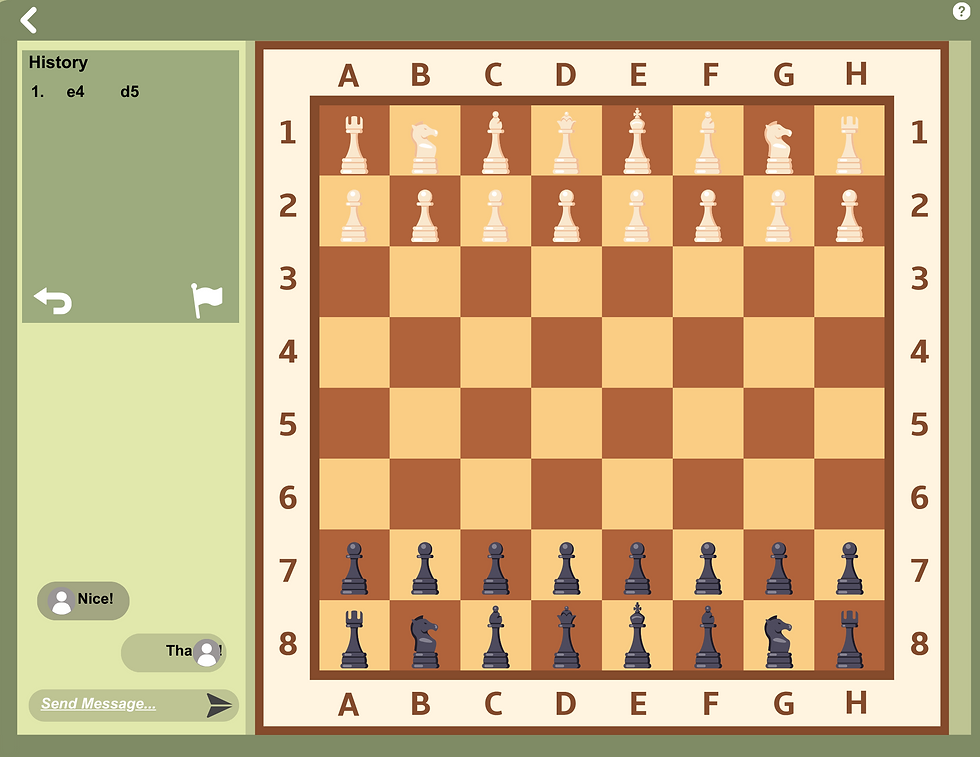
Through several rounds of redesign and iteration, I simplified the interface layout and reduced the number of competing visual elements on the screen. I also replaced the bright green color palette with a darker interface theme that created stronger contrast between the background and interactive elements. These changes improved the visual hierarchy of the interface and allowed users to identify navigation controls more easily. This iterative design process became one of the most valuable learning experiences of the project. Instead of viewing design as a single creative decision, I learned to approach it as a process that evolves through testing, feedback, and revision. Observing real users interact with the prototype helped me understand how design decisions affect usability and user experience.


In addition to interaction design, my coursework also helped me develop technical skills in web design and digital media production. In BIMD 233, I built and revised web pages using HTML and CSS, which strengthened my ability to translate visual design concepts into functional digital environments. Coding web interfaces required me to think carefully about structure, hierarchy, and responsiveness across different devices. Unlike visual design tools alone, working directly with web technologies allowed me to understand how layout systems and interaction behaviors are implemented in real digital environments.
Developing my personal portfolio website became an important extension of this learning process. The website required me to consider how users navigate information, how visual hierarchy guides attention, and how design decisions influence readability and accessibility. Because websites must function across multiple screen sizes, I also needed to think about responsive design and how layout elements adapt across devices.
Early versions of my website included visual layouts that were aesthetically appealing but sometimes confusing to navigate. Certain navigation structures made it difficult for visitors to locate specific projects, and some visual elements distracted from the content itself. Through multiple revisions and feedback from peers, I refined the organization of the site so that projects could be explored more clearly and intuitively. This experience reinforced the idea that digital design is an iterative process that improves through testing, reflection, and continuous refinement.
While design projects allowed me to explore creative problem-solving, my interdisciplinary coursework also encouraged me to examine social and historical issues through research. One of the most significant research projects in my portfolio examines the American Indian Movement (AIM), particularly the 1973 occupation of Wounded Knee. This research explored how historical narratives surrounding Indigenous activism are often shaped by dominant perspectives that emphasize male leadership while overlooking the contributions and experiences of women within the movement.
Application is no longer available.
Through analyzing scholarly sources and historical discussions of the movement, I began to recognize how historical memory is shaped by representation and power. Many accounts of the Wounded Knee occupation portray the event primarily through images of male activists and militant resistance. However, feminist scholarship reveals that women played critical roles in organizing community support, maintaining protest efforts, and shaping political discussions surrounding Indigenous sovereignty.
This research project strengthened my ability to evaluate scholarly sources, synthesize multiple perspectives, and construct evidence-based arguments. More importantly, it showed me how interdisciplinary inquiry allows researchers to connect historical events with broader cultural and social frameworks. By examining the intersection of gender, activism, and sovereignty, I learned how research can challenge simplified historical narratives and highlight perspectives that are often overlooked.
Across these projects, I began to recognize a consistent direction in my work: a strong interest in design as a creative process that helps people communicate ideas, stories, and experiences in clearer and more engaging ways. While research projects strengthened my analytical thinking, design projects allowed me to explore how visual systems, digital media, and interactive environments shape the way people understand information and connect with one another.
Looking ahead, I hope to pursue professional opportunities in design and creative development, particularly in areas that involve digital media, interaction design, and visual communication. My interdisciplinary education has encouraged me to approach creative work from multiple perspectives, combining research, creativity, and technical skills to produce thoughtful and engaging design solutions. Rather than viewing design only as aesthetic decoration, I see it as a way to structure information, shape experiences, and create meaningful connections between people and ideas.
Reflecting on my undergraduate education, I recognize that the most valuable knowledge I developed was not limited to any single discipline or technical skill. Instead, it was the ability to connect research, creativity, and design in ways that allow complex ideas to be communicated more clearly. The projects in my portfolio represent different stages of that learning process and illustrate how interdisciplinary thinking can shape both academic inquiry and creative practice. These experiences will continue to guide my work as I move forward into professional environments where creativity, adaptability, and critical thinking are essential.